
*The contents in this blog relates to legislation in South Australia.
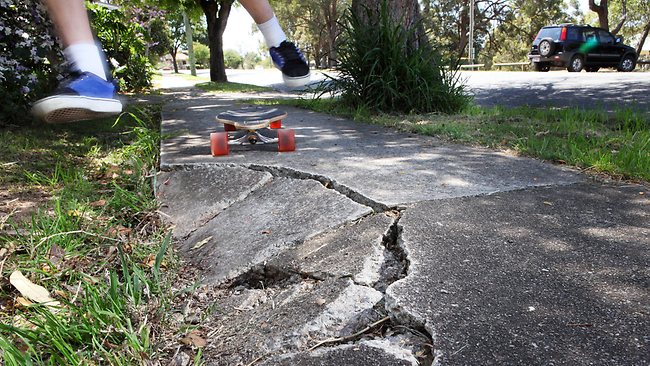
Footpaths and walkways are a critical part of our infrastructure, which allow walkers to access local destinations and public transport. Footpaths are particularly vital for elderly citizens to access community services. Whether it is uneven concrete, crumbling pavers, or tree roots disrupting the ground, our safe walking paths are often not so safe. But what can you do if you injure yourself after a fall on a footpath, and can you claim?
The answer depends largely on where the accident occurred.
Where you may be able to claim compensation
1. Falls on private property
If the fall happened on private property, you may be able to claim compensation for the injury, loss and damage that you have suffered.
Examples include:
- Supermarket or shopping centre car parks.
- Footpaths within private complexes.
- Commercial premises or privately owned walkways.
In these situations, the owner or occupier of the property has a duty to take reasonable care to ensure the area is safe. If they knew or ought to have known of the hazard, and failed to fix or warn you about it, they may be legally responsible for your injuries, losses and expenses.
2. Certain falls on public footpaths (limited circumstances)
Claims involving public footpaths are more complex. Local councils and other road authorities have significant legal protection under South Australian law.
However, you may still be able to claim in some limited cases such as:
- The council actively caused damage to the footpath.
- The injury resulted from works or activities arranged by the council, rather than simple wear and tear.
- A third party was responsible for the hazard.
Examples may include:
- Poorly managed construction or repair works.
- Hazards created during council‑approved works that were not properly made safe.
- A third party created a hazard with an unsafe water grate, or meter box.
Each case depends on its specific facts, so legal advice is essential.
Where you usually cannot claim compensation
In 2004, the Civil Liability Act 1936 (SA) was amended so that road authorities (including councils) are not liable for a failure to maintain, repair or renew a “road”.
The definition of a “road” includes a street, thoroughfare, road, bridge, busway, alley, laneway, walkway, carpark, footpath or other structure associated with a road.
Because of this, councils are generally not liable if your injury was caused by:
- General wear and tear
- Uneven surfaces that developed over time, such as potholes in roads
- Cracked or damaged footpaths that had not been repaired
This means that many claims relating to ordinary footpath defects on public land are barred by law.
Time limits
There is a 3 year time limit for all personal injury claims in South Australia, so it is best to seek legal advice as soon as possible to determine whether there is any avenue to claim, and who the potential claim would be brought against.
For further information about general public liability claims, please read more here: Slips, Trips and Falls: Making a Public Liability Claim.
Call our personal injury lawyers on 8213 1000 to discuss the circumstances of you injure yourself as a result of a fall. We act on a no win no fee basis, and will have a no obligation discussion with you about your injuries.